Free Trial

Global Telecoms Business Copying and distributing are prohibited without permission of the publisher
Email a friend
  • To include more than one recipient, please seperate each email address with a semi-colon ';'


Interview: Mikhail Shamolin of MTS

20 September 2009

Mobile operator MTS is about to complete a deal to buy a controlling share in broadband operator Comstar UTS, which brings control of Moscow’s fixed network. Mikhail Shamolin, CEO of MTS, outlines plans for the days when Comstar sell through MTS’s growing retail network

Read more: [MTS] [Russia] [Comstar] [Sistema] [Moscow] [MGTS] [Shamolin] [Shyam]


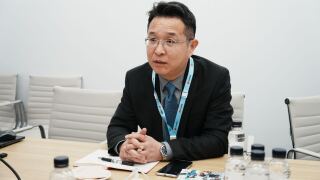
Mikhail Shamolin: MTS wants to be an active
player on the infrastructure and the content side


Russian mobile giant MTS is about to complete its biggest deal yet, its merger with one of the biggest operators providing fixed phone lines, internet services and IPTV.

The deal for MTS to take over a controlling share in Comstar UTS should be closed “in the first days of October”, says Mikhail Shamolin, the CEO of the MTS group.

“We want to participate in the growing broadband market in Russia,” he tells Global Telecoms Business. “Comstar for us is a great platform.”

Both companies are ultimately controlled by Sistema, a Russian industrial giant with extensive interests from electronics to travel. But both are also public companies — Comstar is listed on the London Stock Exchange and MTS on the New York Stock Exchange as well as on Moscow’s Interbank Currency Exchange.

So the deal was not something that was nodded through by the board of Sistema, which owns 52.8% of MTS and 51% of Comstar.

The deal will be an opportunity for some consolidation in Russia’s fragmented telecoms market, where there is a network of shareholder relationships that can be baffling to an outsider.

MTS has 68 million customers in Russia and 28 million in five neighbouring countries — normally referred to the Commonwealth of Independent States, the CIS, which was created after the break-up of the USSR almost two decades ago. In the second quarter of 2009 its revenues were more than $2 billion, with net income of $563 million.


Moscow’s phone network

At the heart of Comstar’s operation is a gem. It owns 56% of MGTS, the Moscow city phone company, which operates 4.3 million lines, including 3.6 million households, in the booming Russian capital, where it has a 77% market share.

Comstar “also has cable TV networks in the regions, covering major Russian cities”, says Shamolin. It has “about half a million cable TV households”.

It October 2008 Comstar CEO Sergey Pridantsev told Global Telecoms Business of plans to roll out fibre through the Moscow network. This programme has been disrupted, Shamolin tells GTB now, because of a change in the Russian government’s policy on Svyazinvest, the holding company for former state-owned local fixed and mobile operators across the country.

“Comstar took a 25% stake in Svyazinvest,” says Shamolin, initially as a first stage in the complete privatisation of the holding company. “Now this has changed,” he notes. The government no longer wants to sell. “It doesn’t make sense for us to continue owning this stake,” he says. “We are negotiating with the government to exchange our Svyazinvest stake for the stake the government has in MGTS.”

That would mean MGTS became fully private and Svyazinvest 100% state-owned, and “it would remove the debt” that Comstar ran up in order to buy the 25% stake — a debt that delayed the fibre project.

Plans for Svyazinvest

What will become of Svyazinvest? “The government can extract more value and maybe privatise it later,” says Shamolin. It’s “completely unclear” when that may happen, though.

But the future of Comstar is clearer. MTS will take over Sistema’s 51% holding, paying $1.2 billion to its majority shareholder.

“It is our intention to rebrand Comstar as MTS,” says Shamolin. But MGTS will be left with the old name: “It is still a name in Moscow,” he adds. The rebranding should not be painful: all three companies use similar logos, based on a white egg-shape, with their names alongside. Apart from the names, only the colours differ: red for MTS, blue for Comstar, and turquoise for MGTS.

It makes sense to rebrand Comstar’s fixed broadband and IPTV services as MTS, says Shamolin. “MTS is already countrywide.”

And then the expanded MTS will be able to cross-sell its fixed and TV products. “We’re still putting together the integration plan,” he says.

He doesn’t foresee a change in Comstar’s management though. “Comstar remains fully traded on the LSE and we will be managing the company through the board of Comstar.” There will be an agreed strategy and a set of key performance indicators, and if Comstar’s performance “is up to requirements” there will ne “no issue” of management changes.

Arm’s length transaction

Shamolin is keen to emphasise that, though Sistema is a dominant shareholder in both companies, “this transaction has been at arm’s length”, with “a committee of independent board members running the transaction”. The terms were taken “out of Sistema’s hands”, he adds.

Sistema has acted as “a portfolio manager” and he does not see any move by Sistema to change the relationship. “This is it for the near future.”

Meanwhile, though, there is another developing relationship between Sistema and MTS: in 2008 Sistema took a 73.7% stake in Shyam TeleServices, a new mobile phone company set up in India by the Shyam group, which retains 23.8%.

The new operation, which has spectrum licences for all 22 regions of India, is branded MTS — and Shamolin is on the MTS India board, which is chaired by Ron Sommer, the former Deutsche Telekom boss, who is also on Sistema’s board.

India “is a very interesting case for us”, says Shamolin. It is the only market in developing countries “which can bring substantial growth”, he says. “There are 800 million people without a phone”, and India permits foreign investment — unlike China, which of comparable size. “The Chinese market is closed. Others are fragmented and penetrated.”


Profitability

But it is necessary to get this in perspective, he warns. In India, ARPU is low, “so there is a question if you can make money”. But there is no question about customer demand. He “would not be surprised” if MTS picked up “50-70 million customers” in India, “but the key question is the profitability”.

It’s early days, and Sistema is not making a profit on its investment yet. “The Indian business is a start-up, and MTS is an advisor and observer.” He doesn’t know what Sistema’s long-term plans for the project are, he says. “Given that it only started to operate in February 2009, it’s too early to say.”

Mobile in India is “very different” from the market in other countries outside Russia where MTS operates, he adds: places such as Uzbekistan, Belarus and Armenia. In India, a mobile phone gives someone “a personal identity”, he says, with a note of surprise at the share of their cash people spend on their mobile service.

Which takes us back to the CIS, where MTS is developing fixed broadband and internet services, as well as content for the entertainment market. “There is some continued growth in the voice segment, but voice penetration is not up to the levels it should be.”

The recession has had an effect: “People talk less,” he says. But he sees a recovery coming in Russia, an economy which is based on the prices of commodities such as oil and metals. “The Russian economy is recovering now,” he adds.

But the recession also hit many of the retail chains that MTS used in order to serve its customers and to win new customers. Some vanished from the scene and one was bought by rival mobile company VimpelCom, says Shamolin. “So we are building our own distribution network.”


Retail chains

At the end of 2008 it concluded a deal with one retailer, which will be rebranded as MTS; and in February 2009 it agreed to pay $85 million for a chain of 512 shops in 180 cities.

Retail “has a lower margin” than mobile operations, but the plan is “about taking control of distribution and growing the business in the retail market”. The idea is to have “close to 2,000 of our own shops” with “about 1,000 franchise outlets”, he says. That will account for “about 60-70% of the market”, with “the rest through independent mom and pop shops”.

Meanwhile MTS is also investing in content services, led by Omlet, which Shamolin compares to “an iTunes with a Russian angle”, with video and audio that customers can download. “The content library is not as big as we want,” he says. “It’s been online only three months”, and the company has just done one deal with Paramount and is conducting “similar negotiations with Sony and others”.

And such deals will be significant once the Comstar deal goes through. “We are placing our bets on internet-based TV”, says Shamolin: “Most entertainment will come via the internet connection.”

Which means that the new MTS wants to be more than just a fixed and mobile set of bitpipes. “We want to be an active player on the infrastructure and the content side,” he concludes. GTB


Mikhail Shamolin

President and CEO of MTS

1993 Graduated from the Russian Academy of Government Service

1996-97 Wharton Business School, US

1998-2004 Consulting positions at McKinsey

2004-05 MD of ferroalloys division of Interpipe, Ukraine

2005 VP of sales and customer service at MTS

2006 Head of MTS Russia

2008 President and CEO of MTS group

[Click here to download the PDF]


Have your say
  • All comments are subject to editorial review.
    All fields are compulsory.


Advertisements