Free Trial

Global Telecoms Business
Global Telecoms Business Copying and distributing are prohibited without permission of the publisher
Email a friend
  • Please enter a maximum of 5 recipients. Use ; to separate more than one email address.


After years of rapid growth, Qtel plans customer focus, says CEO Nasser Marafih

26 March 2012

Qatar’s Qtel has grown so fast that 80% of its business now comes from outside its home market. Now, CEO Nasser Marafih tells Alan Burkitt-Gray, the company wants to improve the services for its 83m customers, including content and better broadband

Read more: Qtel Qatar Wataniya Tunisiana Asiacell Indosat Doha


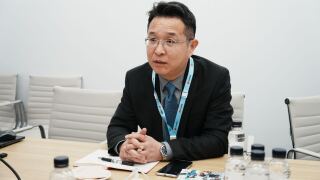
Nasser Marafih: We have a very strong portfolio, and a strong
team that we have built up. It is important to focus on the customer 
                    
                    
There aren’t many CEOs of operators who can claim growth rates averaging 57% a year over five years. But that’s the achievement of Nasser Marafih, who has headed Qatar-based Qtel for the past decade.
“We are now one of the biggest companies in the region,” he says. At the end of 2011 it had 83.4 million customers, spread across 17 countries from Algeria in north Africa to Indonesia.
At the company’s capital markets day, held in Doha, the capital of Qatar, at the end of January he compared Qtel’s growth over the period since 2006 with Etisalat at 18%, Saudi Arabia’s STC at 11% and Zain’s 3%.
“We believe we have a very strong position,” says Marafih — almost universally known in the company as “Dr Nasser” — speaking to Global Telecoms Business at Mobile World Congress at the end of February.
Growth has slowed after a period of rapid expansion, he admits. In the annual figures for 2011 published just a few days after the interview, Qtel reported year-on-year revenue growth of 16%, with a 12.4% increase in the number of customers.
The rapid expansion was achieved through a programme of buying businesses outside the independent state of Qatar, a monarchy with a population of only 1.8 million. A map of the company’s interests shows operations from north Africa — Algeria and Tunisia — across the world to Indonesia and the Philippines, via Iraq and Pakistan.
Now, he’s looking for the next growth opportunity for the company. Not further acquisitions, it seems, but more services in the territories where it already operates. “Data is still very low, and in some markets we don’t even have 3G,” he says. There are still only 2G services in Tunisia, where Qtel owns Tunisiana; in Algeria, where its brand is Wataniya; and in Iraq, where it has a 30% stake in Asiacell.
The company bought Kuwait-based Wataniya, with operations in six countries, in 2007. “In Algeria we started with 3.5 million customers. Now we have 8.5 million,” says Marafih.
Having gone through a period of strong growth, there’s a feeling that Qtel is now entering a period of consolidation. “We have a very strong portfolio, and a strong team that we have built up,” says the CEO. It is important to review the challenges for the future, he adds. “It is important to focus on the customer. We have to prepare the company to build the tools and insight. We have a strong portfolio.”
The company “has to buy content”, he adds. “We have a lot of hard work to do. Customers are becoming more demanding, not just about telephony but about over-the-top. It’s important for us to be ready. We have to give them the attention they need.” 
                                        
                                        
Strong investment 
                    
At the same time the company is investing heavily. “We spent roughly $2 billion on capital expenditure in 2011,” he says, “most of it in growing markets like Indonesia and Algeria.” But it’s also starting to plan LTE in Qatar, “though we have to keep an eye on the return on investment”, he adds. “We see a real demand for LTE. In Qatar the 3G is getting full.”
The company has opened extra 3G capacity on the 900 megahertz spectrum, “but every time we add a site it is filled”, he says. “Qatar is very hungry for services.”
Marafih has been associated with Qatar Telecom — as it was called before its international expansion plan went into operation — for 20 years, first spending two years as an expert advisor from the University of Qatar, where he was a lecturer and assistant professor in the electrical engineering department. He studied engineering at George Washington University in the US capital, where he also earned a PhD in communication engineering. He formally joined Qtel as director of strategic planning and development in 1994 and became CEO in 2002.
Content is important, especially as broadband data services expand across the many emerging markets that Qtel operates in. “The penetration is still low but the prize is big,” he says. “Customers are going to demand content and that has to be customised and localised.”
He’s not proposing that Qtel turn itself into an end-to-end production house. “There are things we have to do on our own, and there are other people doing things already,” he says. “The challenge is to partner with them.”
And when it comes to partnering, Qtel is in a strong position, he believes, because of its presence in 17 markets and its 83.4 million customers. “We are in key markets. That will be the difference for us compared with small operators.”
Qtel isn’t, though, just a mobile operator. In its home territory of Qatar, it offers an integrated package of fixed and mobile plus cable television. “We were the first to bring cable TV services to the region,” he says.
Now the company is pursuing an aggressive plan to build a fibre-to-the-home network, replacing copper with fibre in 1,500 homes a week. The aim is to boost customers’ internet speed to 100 megabits a second, he says.
“We also have fixed telecoms businesses in Oman and — the biggest market we have — Indonesia. We are getting a fixed licence in Tunisia.”
So he believes that content providers have an attractive potential partner in Qtel, especially because most of its countries are Arabic speaking. “The great benefit of most of our operation is that there is one language.” For the Arabic world, “we can serve all of our customers with the same language and we share the same cultural values”, he says.
One of the exceptions is Indonesia — but that’s also a significant market, with more than 230 million people, as is Pakistan, with more than 170 million. “Of course, the needs of the different markets are different.” 
                    
                    
Central procurement 
                                        
The company has also been benefiting from scale over the last few years by moving towards central procurement. “We meet frequently as a group, and we are trying to coordinate products.”
As Mobile World Congress was closing the company announced what it called “a comprehensive frame agreement” with ZTE, covering 3G and LTE for the Middle East, north Africa and Asia. Its FTTH programme in Qatar is mainly equipped by Huawei, he says.
Meanwhile Qtel is developing content services for its markets — including mobile finance, mobile education and mobile health.
“The focus is financial,” he says. In late 2011 the company launched Qtel Mobile Money, its own m-wallet service. It allows customers in Qatar to transfer money not only to others in the same country but internationally — a service designed so that the country’s many foreign workers can send money home. After the launch in Qatar, the company plans to roll out integrated mobile money services across the other key markets.
The group “has made the launch of mobile money services across our operations a strategic priority, recognising the strong demand from our customers, and the important social benefits this service will provide”, says Marafih. “The services provide access and security for a whole cross-section of the community that is under-served by traditional banking, and we aim to be a leader in the countries we serve.”
Qtel’s partners in the project are Sybase 365, a mobile money specialist, EastNets, which ensures compliance with anti-money laundering rules, and wholesale operator BICS. “We are working with the Qatar National Bank,” he says. “It’s just been launched in Qatar. Now we are looking to see how to roll it out [to other countries].”
The service will be “an important new revenue source”, but it will also have “a demonstrable social impact”, says Marafih. “Customers will have greater security in sending money to friends and family overseas, as well as greater control over their spending at home.”
In a more recent addition to the service, any customer with a mobile money account can pay cash into their m-wallet via a number of self-service machines. The company is also working with employers in Qatar to enable them to make direct payments of salaries into mobile money accounts.
Education is a bit further away, says the CEO. “We’re looking at it, but it is very challenging, because we need to work with governments and schools. And in the digital world things have to be looked at differently. To compete for the attention of children it is very challenging,” he says. “When I look at my kids I see that content has to be something that is very exciting.”
Qtel is talking first of all to the Qatar government “and others, to share their experience”, he says. 
                    
                    
Empowering women 
                    
Not all initiatives start in Qatar. In another MWC announcement, the company announced that its Indonesian operation, Indosat, is working with Nokia on a project to give women the opportunity to own and use mobile phones. This project is backed by the GSM Association’s m-women programme, a global public-private partnership aiming to reduce the global mobile phone gender gap. Indosat and Nokia will be launching a package available on selected phones which will include a service focusing on women’s empowerment.
Meanwhile the company is starting to explore opportunities in the corporate market. “The idea is not just to provide access but to provide solutions.” It is examining business-to-business possibilities as well as trying to build services for larger companies — particularly cloud services.
Corporate customers in Qatar need data centres, he notes, and cloud services “are one of our key initiatives”, he adds. “But you have to do it with the companies that have the skill set. That’s started.” Qtel has a five-year partnership with AT&T, aimed at providing managed services to companies in the region. “We have services that are being built.”
No doubt the company will seek to improve its stakes in some of its international operations — “We believe that it’s important to take control of these assets,” says Marafih — but it has a lot of work to do to build up advanced services across the 17 countries where it operates.
A few years ago 100% of Qtel’s revenues came from Qatar. Now 80% come from outside. The days of 57% annual growth have gone, though 16% annual revenue growth is nothing to be sad about. GTB

More from GTB 
Palestine to offer third mobile licence 07 Apr 2010 
Qtel and Tata to develop Gulf cable project 08 Mar 2010
Interview: Adrian Dilworth of Vodafone Qatar 02 Aug 2009 
The emerging face of M&A in the telecoms industry 01 May 2009
enmd


Have your say
  • All comments are subject to editorial review.
    All fields are compulsory.


Advertisements